
 Micro Dynamic Sensor
  Sample Preparation
  Test Accessories
  Digital Image Measurement
  Geotechnical Tests
  Rock Tests
  Coarse-grained Soil Tests
  Other Tests
  In-situ Tests
  Engineering Investigation
  Drilling Rigs
  Ocean Testing
 Project Category: Seismic Test for LNG Storage Tank Facilities
1. Project Overview
Large-scale LNG (Liquefied Natural Gas) storage tank facilities are designated as "national major energy installations and livelihood support projects". As special structures for storing ultra-low-temperature, flammable and explosive media, LNG storage tanks are assigned the same safety classification as nuclear power facilities.
Most LNG storage tanks in China are constructed in the eastern coastal areas with soft ground conditions. Moreover, China is an earthquake-prone country and seismic activities are inherently random. Therefore, it is of great significance to investigate the seismic responses of large-scale LNG storage tanks on soft soil sites and analyze the influence of pile-soil interaction on superstructures.
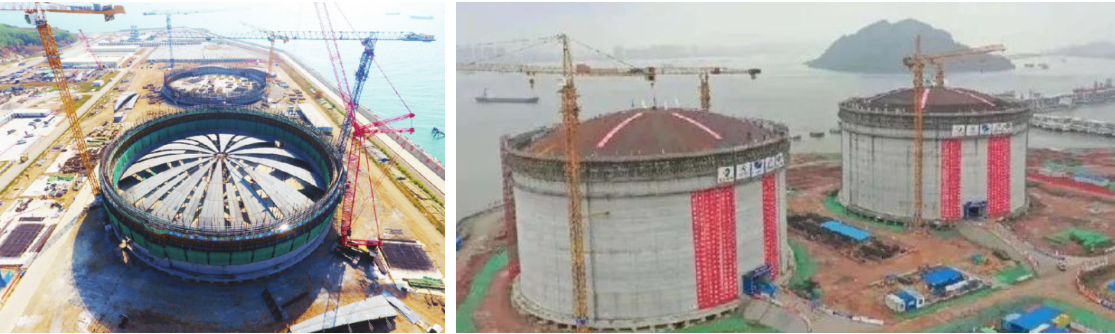
Figure 1: A LNG storage tank project under construction along the coast
2. Service Content
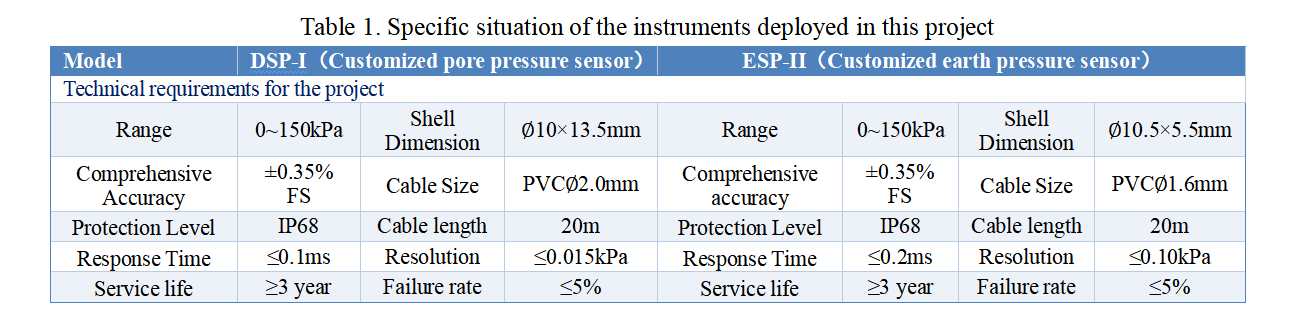
For this project, technical services such as on-site installation guidance, fault maintenance and calibration, and data analysis and processing shall be provided to the project owner for 12 pore pressure sensors and 30 dynamic earth pressure sensors.
The pore pressure sensor provided for this project needs to monitor the "rapid" dynamic hydraulic pressure changes and liquid level shaking wave heights inside the LNG storage tank structure under the action of pile-soil, soft soil foundation, and rigid foundation. The earth pressure sensor needs to record the dynamic earth pressure changes of pile-soft soil-tank and soft soil-tank interaction.
The pore pressure sensors used in this project shall meet the requirements of miniaturized design, high frequency response rate (response time ≤ 0.1ms), resolution ≤ 0.015kPa (for recording tiny dynamic water pressure changes and free attenuation), and shall be capable of long-term operation in fluids. The earth pressure sensors shall be miniaturized (to reduce soil arching effect and stress concentration), have a high frequency response rate (response time ≤ 0.2ms), and a resolution ≤ 0.10kPa (for recording tiny dynamic earth pressure changes), and shall be adaptable to humid environments for a long time.
This project requires a failure rate of ≤ 5% for pore pressure sensors and ≤ 5% for earth pressure sensors, capable of withstanding strong seismic conditions (PGA=0.3g or more) for ≥ 300 groups, and a service life of ≥ 3 years.
The instrument models provided for this project are DSP-I pore pressure sensor (customized) and ESP-II earth pressure sensor (customized), with the main parameters shown in Table 1.
3. Project Overview and Representative Data
(1) Experimental equipment
The test adopts a 5m×5m three-directional (X, Y, & Z axes) six-degree-of-freedom seismic simulation shaking table. Its key performance parameters are as follows: load-bearing capacity of 30 tons, full-load acceleration of 2.0g in X, Y, and Z directions, frequency range of 0.1Hz to 100Hz, and compatibility with input of any seismic ground motion waveform.
(2) Experimental materials
The test soil used is silty clay excavated from a construction site in the eastern region of China. The measured soil properties are as follows: density of approximately 1.9g/cm³, moisture content of approximately 17%, cohesion of approximately 38kPa, and internal friction angle of approximately 29°. Before to the test, the soil was subjected to impurity removal. After filling and compaction, soil samples were taken for testing to ensure that the soil parameters match those of the original site.
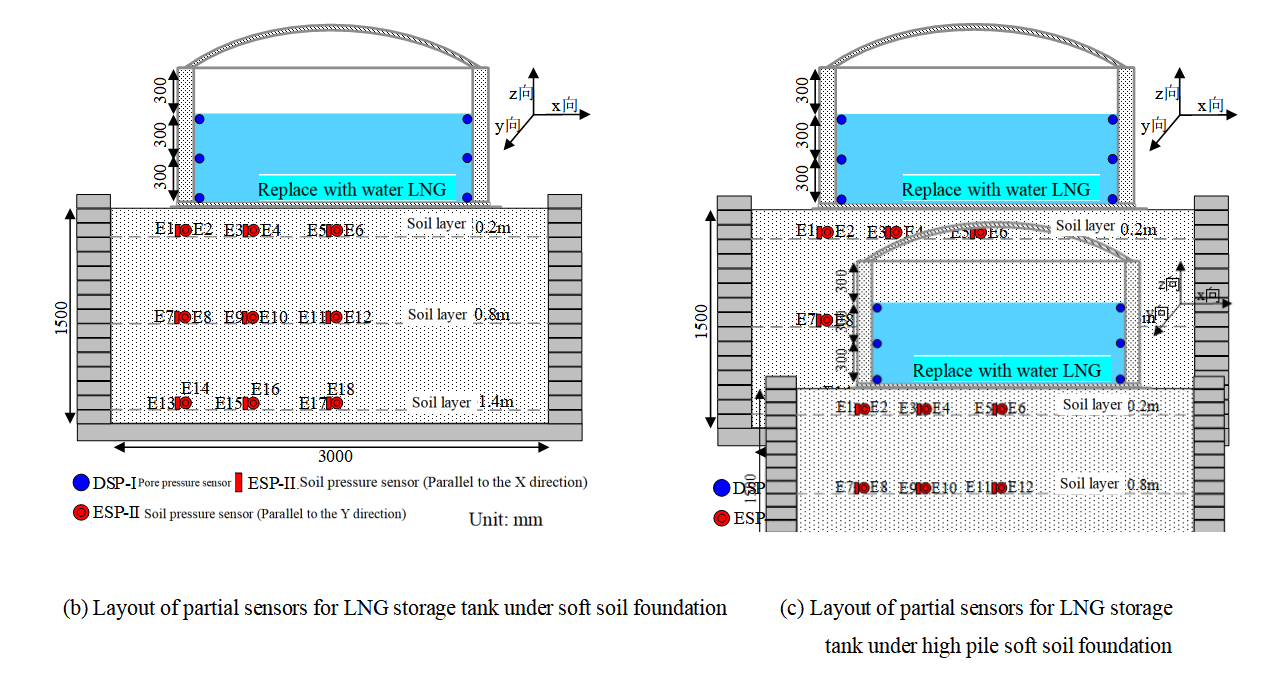
(3) Sensor deployment plan
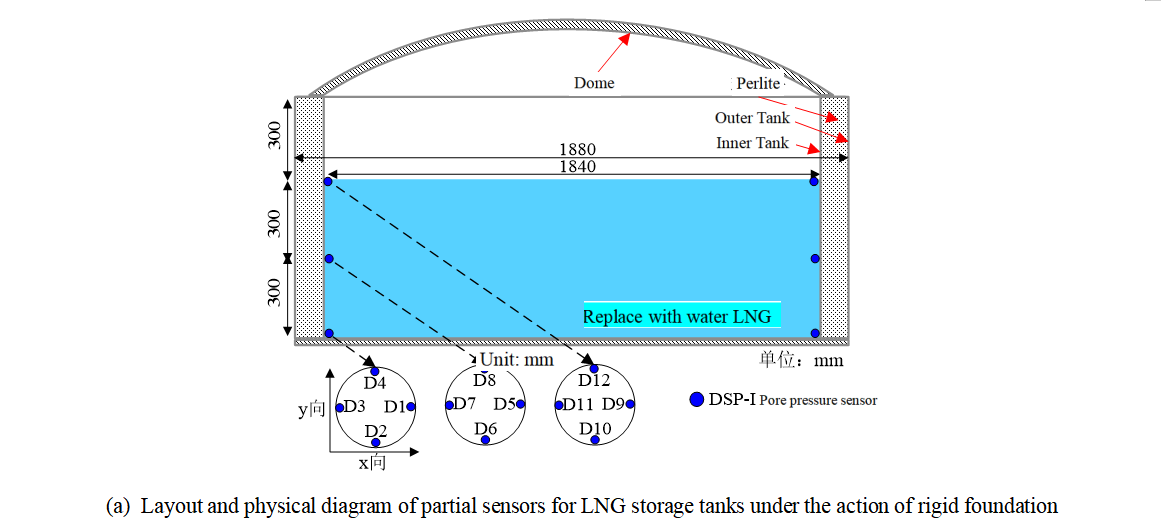
Due to the confidentiality of the project, only partial sensor deployment plans and physical model images are indicated, as shown in Figure 3.
(4) Seismic motion application plan
Table 1 shows the input partial seismic conditions. The test conditions for this experiment include no water, 1/3, and 2/3 (tank water level), with a total of about 560 sets of seismic inputs. Among them, there are about 330 sets of strong seismic conditions (PGA ≥ 0.3g) with a duration of 90 days.
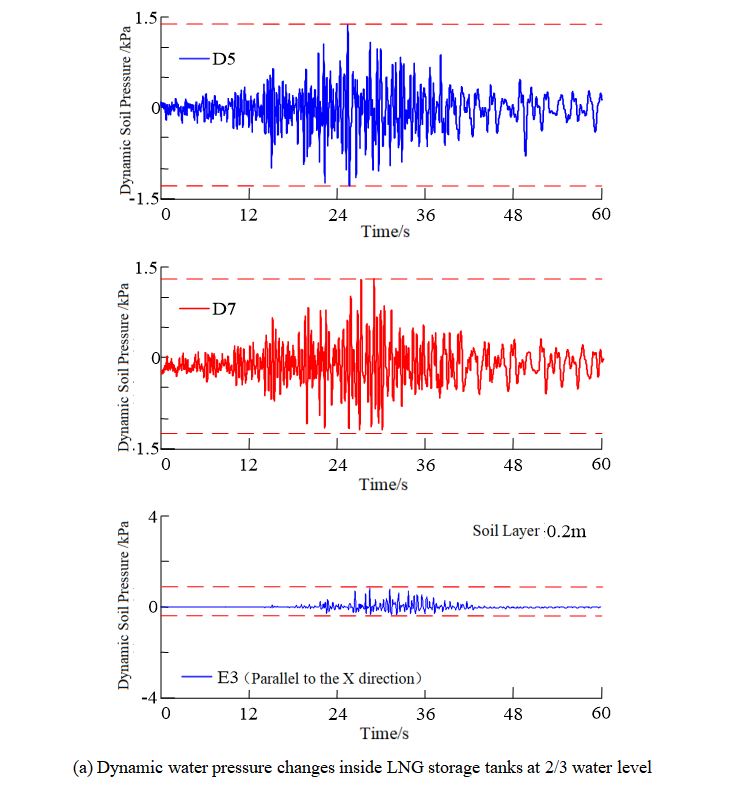
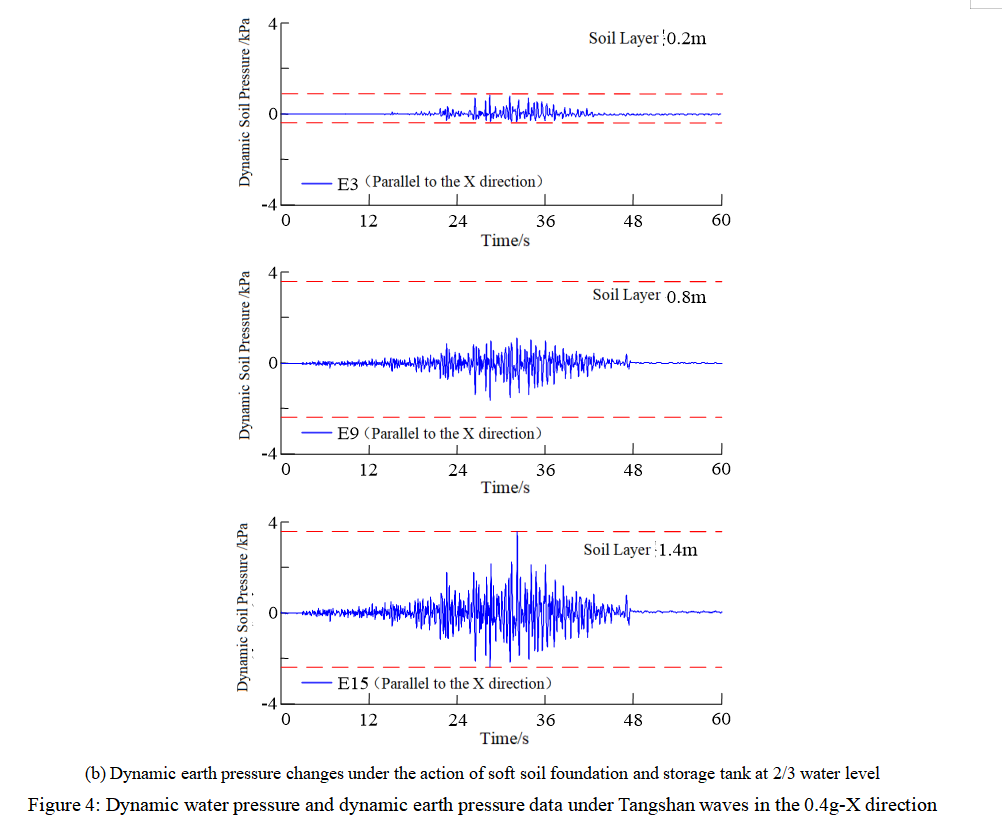
(5)Representative data of power test
4. Service evaluation
This engineering project lasted 30 days. Our technical personnel provided on-site technical services throughout the entire project duration at the project location, including guidance on sensor layout schemes, fault diagnosis, data analysis and processing, as well as sensor maintenance and calibration (such as issues like sensor cable breakage caused by human error during the formwork removal process). More importantly, the data recorded by the DSP-I pore pressure sensors and ESP-II earth pressure sensors provided crucial information for the seismic resistance research of large-scale LNG storage tanks.
User evaluation: The total number of earthquake motion input conditions for this project is about 560 sets, of which about 330 sets are strong earthquake motion conditions (PGA ≥ 0.3g). The test lasts for 30 days, and 12 DSP-I hole pressure sensors and 30 ESP-II earth pressure sensors can work normally with a sensor failure rate of ≤ 5%. The dynamic water pressure and dynamic earth pressure force measurement data are good, which also indicates that DSP-I hole pressure sensors have the advantages of high precision, dynamic testing accuracy, reliability, long-term stability, and long service life, and can be well applied to complex engineering environments.
References:
[1] The CNOOC Zhangzhou LNG natural gas project is steadily advancing http://www.zhangzhou.gov.cn/cms/html/zzsrmzf/2019-12-01/2085208038.html

 Customer Service QQ